
Player Three-Pointers: Attempts, Makes, and Shooting Swings
Separate three-point attempts, makes, and accuracy. A worked example shows how volume and small samples affect player markets.
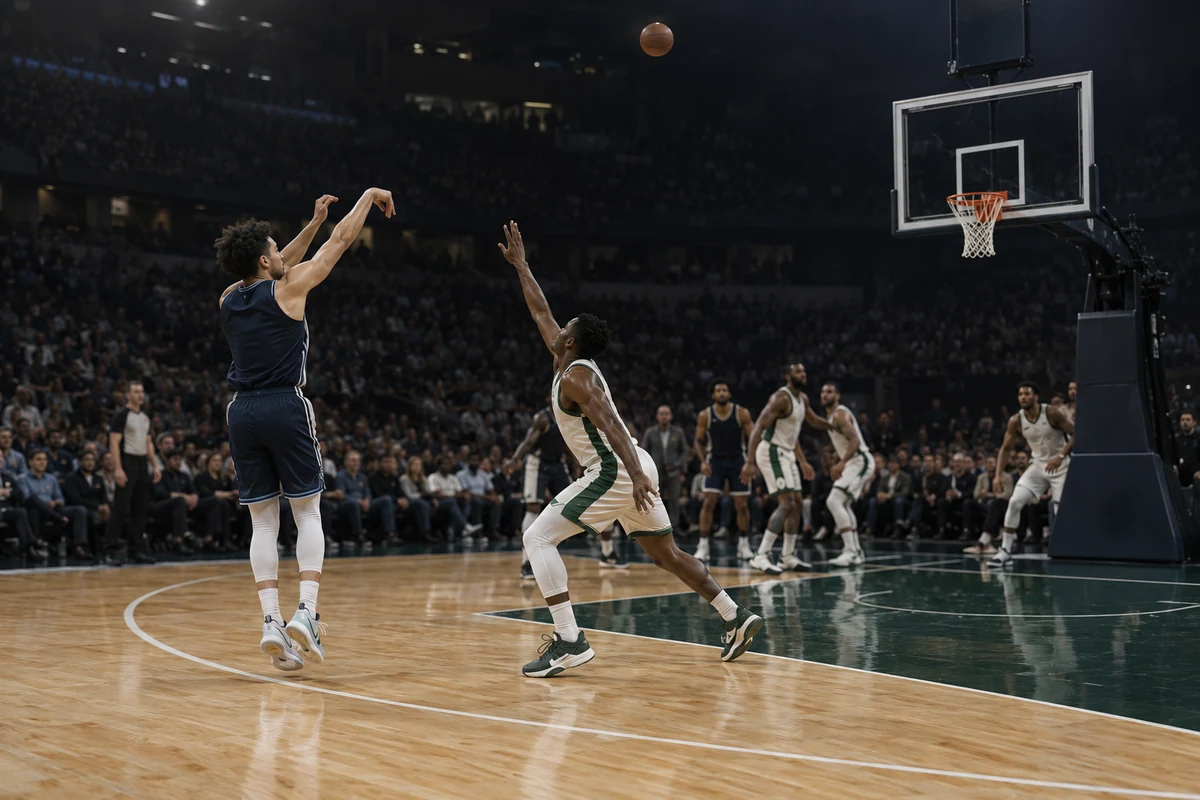
Makes are outcomes; attempts are volume
For a three-point market, distinguish 3PM from 3PA. Made threes show how many long-range shots produced points; attempts show how often a player created that chance. The conversion percentage is 3PM / 3PA, but the same percentage can come from very different samples. These statistics describe what already happened; they do not promise the same result again.
A player who makes 6 of 12 shoots 50%. Another who makes 3 of 8 shoots 37.5%. The first scored more from outside and was more accurate, but he also had more attempts. Looking only at percentage hides volume; looking only at makes hides accuracy and opportunity.
Why a short run swings
Each three-point shot is a separate make-or-miss event. In a short sample, one shot moves the percentage sharply: 2-for-4 is 50%, while 3-for-4 is 75%. That does not prove a change in skill. Over a longer stretch, the number is more stable, but it still depends on distance, defensive pressure, the pass, fatigue, and role.
Check both attempt count and shot type. An open catch-and-shoot attempt differs from a deep shot under pressure; statistics for specific shot types may also use different definitions. A comparison with a season average is useful only when role and volume are reasonably similar. A lineup change, teammate injury, or minutes restriction can change attempts without changing accuracy.
Connecting it to a line
For a made-threes market, expected 3PA and conversion both matter, but one recent game cannot establish a future conversion rate. Check player availability, minutes, tactical role, opponent, and pace. A player can take many threes while making a modest share; then a made-threes line depends more heavily on conversion. A player with few attempts needs a strong percentage to clear a high total.
Do not substitute attempts for makes: 3PA better describes opportunity and workload, while 3PM records points already scored. Combined player lines also depend on other categories; see our guide to points, rebounds, and assists. Check whether overtime counts for the market; the general principles are explained in basketball spreads and overtime.
Compare matching periods and avoid mixing starts with bench appearances without checking the role. Makes, attempts, and percentage answer different questions; together they still do not guarantee an outcome.
Also check the share of a team’s shots that come from three-point range: faster pace can raise total attempts without changing one player’s share. Defenses adjust too; after a run of makes, an opponent may contest the arc more closely, changing the quality of the next attempt. Neither a season percentage nor a recent streak automatically captures that shift.