
Future Data Leakage in Betting Backtests: How to Detect It
Check that a backtest uses only information available before a decision, and see why randomly shuffling matches can overstate performance.
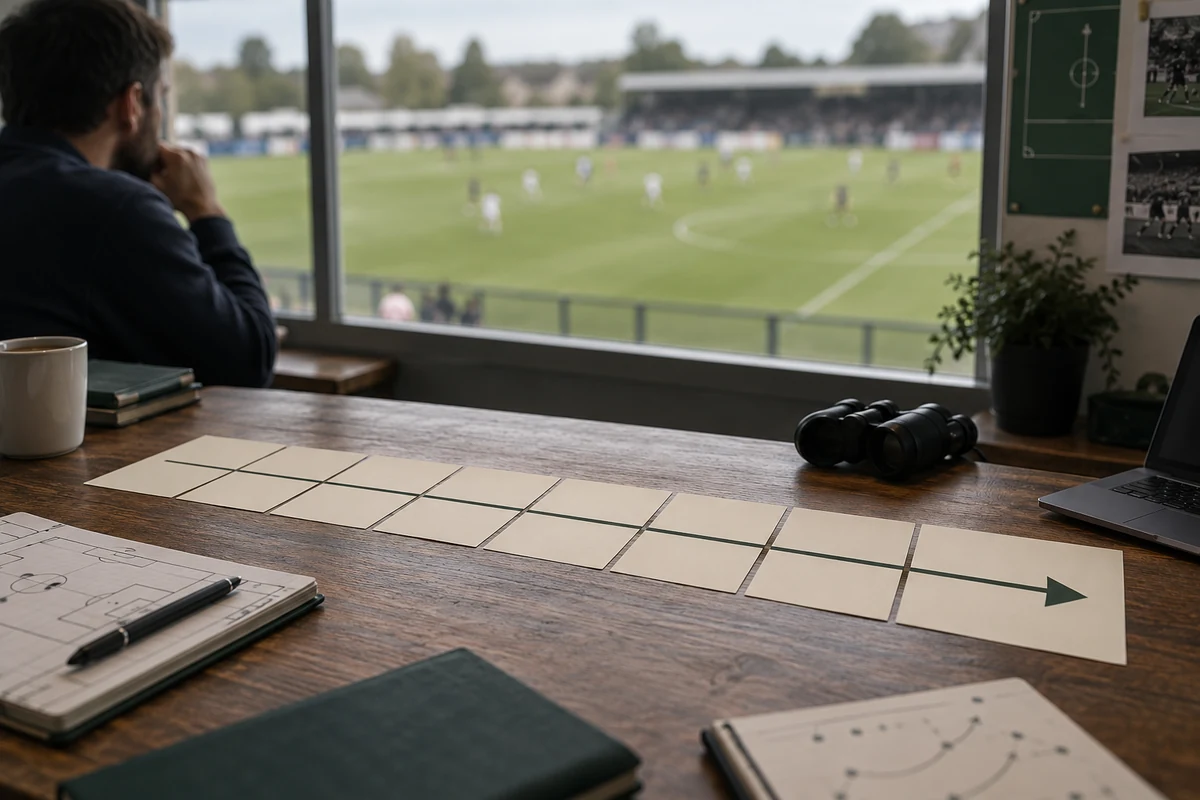
What future data leakage means
Leakage occurs when a simulated historical decision uses information that was not available at the time. A model can look accurate in a backtest while indirectly using the final score, a later lineup update, corrected statistics or averages computed across the full sample. That is not forecasting the past; it is seeing the answer before asking the question.
Start with the decision timestamp. Record match time, forecast time, when each statistic, price and news item became available, and when the result was finalized. For every feature ask: could this value have been known when the bet was made? A fact published before kick-off but later corrected may require an archived snapshot.
Where leakage appears
Common sources include randomly shuffling sequential matches; scaling or imputing the full dataset before splitting; tuning parameters against test outcomes; a season statistic that already includes the match being evaluated; closing odds in place of the price available at decision time; and team performance recalculated after the final whistle. Check duplicate matches, linked competition rounds and features derived from the final standings too.
Split history by time: an early development period, a later validation period and, if needed, a final holdout that is not revisited during tuning. For sequential data, use expanding or rolling windows. The season versus short-window comparison discusses period choice; the article on why the match result does not define decision quality discusses separating decision quality from the final outcome.
A short example
Suppose a strategy selects a bet before a match using a team’s average goals across its previous five games. For a match on 12 March, the feature should use only earlier matches and data available by the decision time. If a script first groups the full season, calculates the mean including the 12 March result and then trains a model, part of the future result has entered the feature. Even a leak affecting only one of five matches can make the evaluation optimistic.
Audit one row by hand: list the dates used in every feature and ensure they are strictly earlier than the forecast timestamp. Then rerun the calculation with a time-ordered split. The AI prediction checklist reminds readers to check data source and timing; for a backtest, fit preprocessing parameters on training data only and apply them to the held-out sample.
Checklist and limits
Keep a frozen pre-match prediction, event-time and publication-time fields, the lineup and odds snapshot available at the decision, a statistics version, attempted parameter choices and the train/test boundary. Check that test results were not used to select features or choose the “best” strategy. If outcome windows overlap or observations come from related matches, assess whether a gap between windows is needed.
A chronological split does not solve every problem: rule changes, a new competition mix or a different data source can create distribution shift. It reduces one specific risk—using future information. If historical snapshots do not exist, label the result as unverifiable with respect to data availability rather than as proof of future betting quality.