
Dead Heat: How a Bet Is Settled When a Place Is Shared
A dead-heat rule reduces the part of a stake treated as a winner when participants tie; examples distinguish win and place markets and show why payout places and product terms matter.
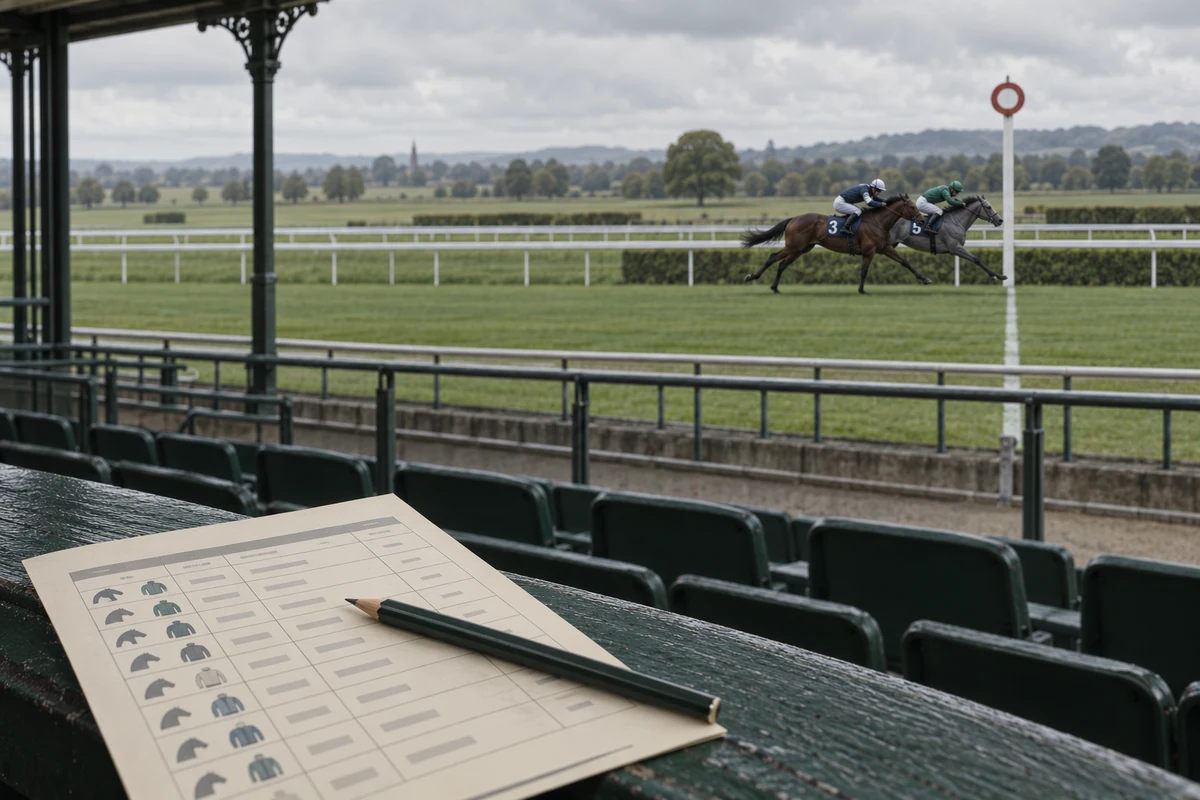
What dead heat means
A dead heat is a tie between two or more participants in a market that would normally have a single placing. It is not necessarily a full loss or full win: settlement may treat only part of the stake as winning and the rest as losing. The term is common in racing and tournaments with place markets, but the exact markets and rules can vary.
In a simple win market, the stake is split across the tied winners. If your selection shares first place with one other participant, settlement treats half the stake as a win at the original odds and half as a loss. With three joint winners, one third is treated as the winning portion. The stake fraction changes; the original odds are not automatically cut in half.
A winner-market example
Suppose 100 units are staked on a tournament winner at decimal odds of 4.00, and that participant shares first place with one rival. Half the stake, 50, is treated as a winner; the other 50 loses. The gross return on the winning part is 50 × 4 = 200. After subtracting the original 100 stake, the net result is +100, before commission or special terms.
For n tied participants in a simple win market, the winning fraction is 1/n. At decimal odds D and stake S, the gross return on the winning fraction is S × D/n; the single-bet net result is S × D/n − S. A participant can therefore be among the winners while the bet still has a net loss if the odds are shorter than the number of joint winners. This is an arithmetic example, not advice on selecting odds.
Place markets are more complex
For a place market, the calculation depends not only on how many participants are tied but also on how many payout places remain after earlier finishers. Imagine a top-five market: three participants finish clearly ahead and five share the two remaining places. Under a common formula, 2/5 of the stake is treated as placed; the other 3/5 misses the available places. With a stake of 100 at odds of 5.00, the winning portion returns 40 × 5 = 200, a net +100 before special terms.
A particular operator may express the calculation differently, for example using payouts remaining, tied participants, odds and stake. Do not transfer a win-market example to a place, each-way or exchange product. Check the exact market, number of places, payout fraction, rounding, currency, commission and whether the bet slip displays gross return or net result. The difference between quoted odds and net winnings is covered in the odds guide; price assessment is a separate question discussed in the guide to overpriced odds.
How to verify the settlement
Record the original odds and stake, official finish, all tied participants and the number of payout places still available. Then split the stake according to the applicable terms and recalculate the winning portion separately. Keep the settlement terms and market status: multi-day events and each-way bets can have additional field-size or place conditions.
If the arithmetic does not match, first establish whether the market uses a dead-heat formula, a special place term or another settlement method. A push or void is a different case: with a dead heat, part of the stake may lose rather than simply being returned.