
Set-Piece Quality: Why Corner Counts Are Not Goal Threat
A corner is the start of a sequence, not a chance by itself. This guide separates delivery, movement, shot location, and second phases from the raw number of restarts.
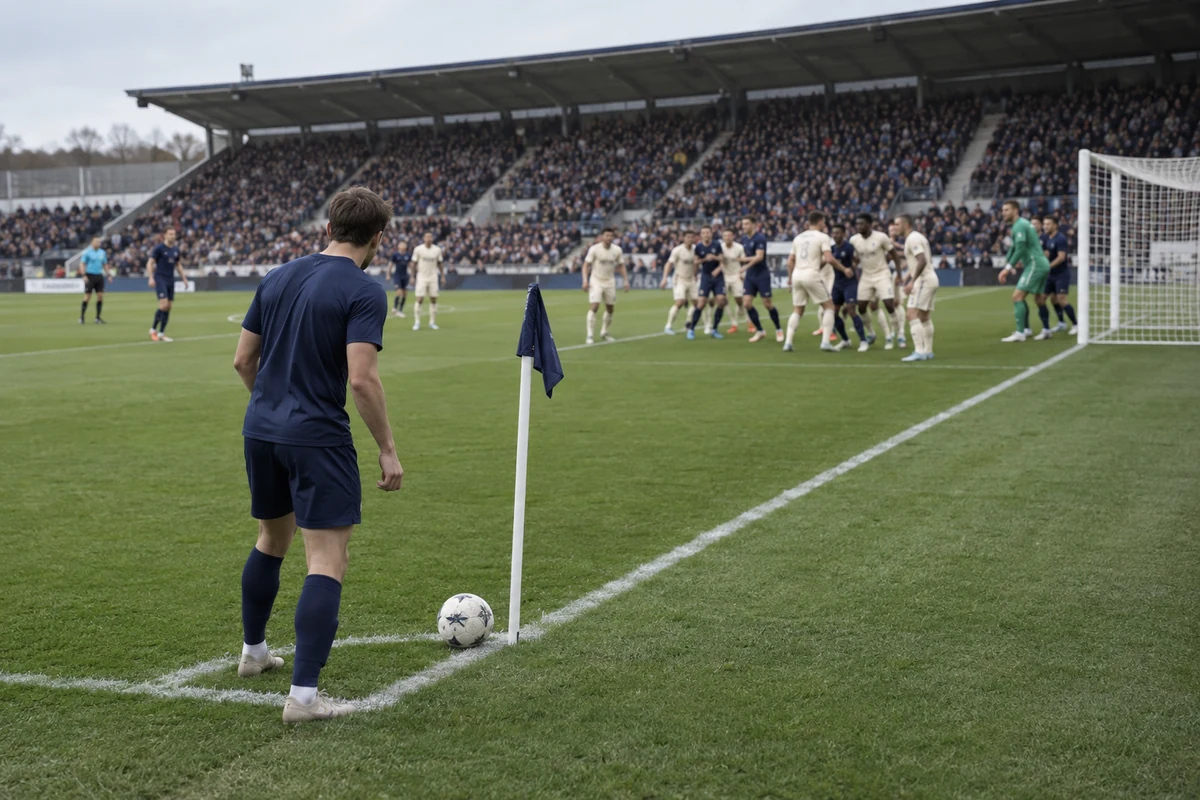
Set-piece quality: a corner is not a chance by itself
A corner count in a report reflects events as defined by that source; check whether it records awarded corners or corners actually taken. Neither count by itself tells you whether the team created danger. Between the whistle and a shot come several decisions: where the delivery goes, how teammates occupy space, who blocks a defender, who attacks the ball, and what happens after the first clearance. Comparing only corner totals is like judging an attack by possession alone.
What goes into the sequence
Start by recording the delivery: was it a cross or a short routine, and did it target the near-post zone, far post, or centre? Then note the movement. One attacker may draw a marker while another tries to get free behind them; a compact defence can still keep its advantage against a good ball. After contact, record whether a shot followed, where it came from, and whether defenders applied pressure. A second cross should not be counted as the same kind of chance as a free header from close range.
Consider a hypothetical example. Team A takes ten corners, but defenders clear most before a shot. Team B takes four: one delivery creates a close-range header, and another clearance leads to a shot from the rebound. Team A leads by volume; which side created the better opportunities depends on shot locations, pressure, and the model if expected goals are used. Even then, a single match cannot establish repeatable ability.
Separate a corner as an event, a shot after a corner, and a goal from a set piece. Some reports group corners, free kicks, and throw-ins into a broad set-play category; others distinguish first deliveries from second phases. Check the event definitions and how long the sequence stays attached to the restart before comparing data. Our guide to football corner-total markets explains why settlement of a corner count is separate from the danger those corners create.
Avoid overrating one delivery
Look beyond the outcome. Ball trajectory and pace, the strength and height of players involved, zonal or man-marking, the goalkeeper’s position, and second balls all shape the sequence. A run of corners can follow pressure and blocked attacks, but it can also result from deflections without a lasting territorial edge. Opponents, score states, and delivery quality change from match to match. Expected-goals figures for set pieces also depend on which events and how much of the possession are included.
Practical use
For a betting analysis, identify the market first: are you considering the number of corners, goals, or another statistical outcome? For corners, flank attacks, defensive style, and score state may matter. For goals, you also need a route to deliver the ball into a dangerous area and finish the attack. Do not transfer a high delivery count into a goal forecast without those intermediate reasons. If the mechanism is not supported by available evidence, keep the conclusion neutral. For a wider starting point, see important football match statistics.
Set pieces create repeatable situations, but their outcomes remain uncertain. Sequence quality and season-long consistency are different questions; a short sample does not make a team automatically good or poor at deliveries.
Read also
Sportexa AI
Apply this to a real match
Choose a match in Sportexa AI and ask the assistant how the available sports data and current odds relate to the idea in this article.
Open the assistant