
A Red Card Changed the Match: Questions to Ask Before Drawing Conclusions
First check the team, time, and confirmation of a dismissal, then discuss possible scenarios and the limits of available statistics.
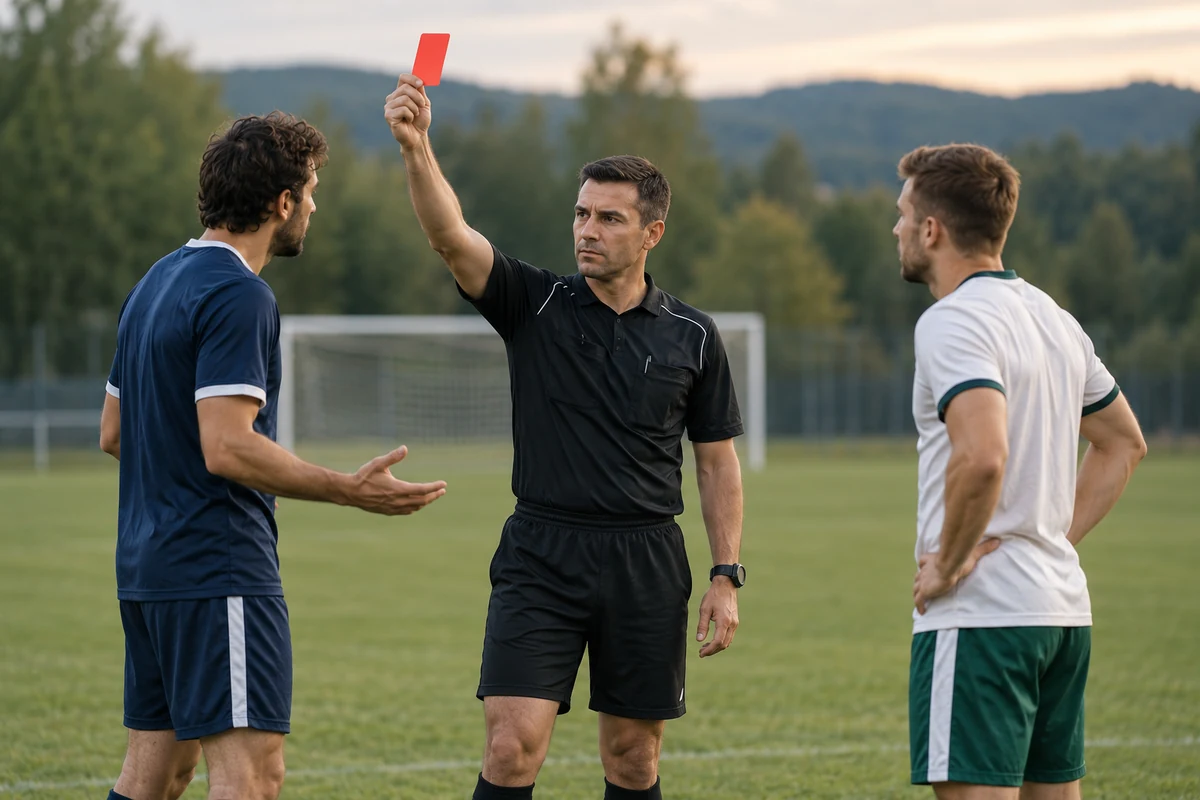
Check the red card before discussing what comes next
A red card can quickly turn a match discussion into a debate about the future: “Now they will definitely come back” or “the game is already decided.” Before you discuss scenarios, establish what happened. A display could be delayed, refer to a similar fixture, or show a disputed incident that is not yet present in the available data.
Sportexa can help you discuss confirmed context for a football match and revisit your earlier impression. A live assessment requires an AI plan with live access, and whether it is available depends on the specific event and its data. The app does not watch a broadcast or automatically report a card; you ask about it.
An example prompt: “A red card was shown in this match. Is the event confirmed, which team received it, and at what minute?” This is an illustrative question, not a claim that Sportexa has already received the event. If the app has not updated yet, compare its information with what you can see.
Confirm the team, time, and event status
Before discussing consequences, check the selected match and participants. Then clarify three details: whether the event is confirmed in the available context, which side received the card, and what time the information refers to. A yellow card, a second yellow that results in a dismissal, and a straight red are different events; do not treat them as the same if the available data do not distinguish them.
If the score or event time differs from your broadcast, ask when the information was available. Do not ask the app to guess whether it has seen the incident. State the mismatch and revisit the question after an update. Data can arrive with a delay.
These checks also help in a conversation with friends. A dismissal on one side, an event matched to the wrong fixture, and a card in a different match are three different situations. Without confirmation, the reasonable conclusion is simply that the incident has not been verified. That proves neither that it happened nor that it did not.
Once confirmed, separate the fact from the scenario
If the card is confirmed, you can discuss what it changes about the match. Under IFAB Law 3, a player sent off after kick-off cannot be replaced. Do not infer the number of players on the field from a red icon alone: first check whether the recipient was an on-field player or someone on the bench. Check the rules governing the match. Even a confirmed change in player count is a condition of the game, not a complete explanation of every attack or the eventual result.
One side may become more cautious, the other may have more possession, or both teams may make different choices. These are possibilities to watch, not tactical facts unless available statistics or line-up information support them. Ask Sportexa: “Which available facts still support the earlier explanation, and what should we reconsider?” That keeps the question about this match without promising that one side will take advantage.
Ask it to separate confirmed information from assumptions: the dismissal and its time; available score and statistics; and possible scenarios after the event. If a statistic covers the whole match, do not treat it as an exact picture of the period after the card. The time window needs to match your question.
Three questions to avoid a rushed conclusion
In the same match chat, try these follow-ups:
- “Which team received the red card, and is its minute confirmed?”
- “Which statistics refer specifically to the period after the dismissal?”
- “Which scenarios are possible but not yet supported by what is happening?”
These questions do not ask the app to guess future tactics. They help you decide what facts to watch on your screen and what Sportexa cannot confirm. If a time split is unavailable, ask it to state the limitation instead of filling the gap with a confident story.
Keep one football match in one chat. Continue there if you are clarifying the same card and its context; start a new conversation for a different fixture. That makes it easier to keep teams, score, and incidents straight.
Live discussion does not replace watching
With an AI plan that includes live access, Sportexa can answer your question using the available event context. It is not a video stream, automatic monitoring, or a guarantee that data appears at the same moment as an incident. Check important changes against your screen.
If you cannot confirm the event, you can discuss ordinary match facts or wait for information to update. Do not treat a missing card in the data as proof that no dismissal occurred, and do not build later conclusions on an unverified event.
Discuss the next incident with more context
Choose the football match you are watching, ask Sportexa about the card, and first clarify the team and time. A live scenario assessment requires an AI plan with live access, and new users need to sign in.
Start a conversation about the match and ask Sportexa to separate confirmed facts from possible consequences. That can make watching more thoughtful, but it cannot promise how the rest of the game will unfold.
Sportexa AI
Apply this to a real match
Choose a match in Sportexa AI and ask the assistant how the available sports data and current odds relate to the idea in this article.
Open the assistant