
Hockey Rebounds: Second Chances Beyond the Shot Count
Examine follow-up shots after a save, work through an operational count, and see why rebound-chance definitions vary by source.
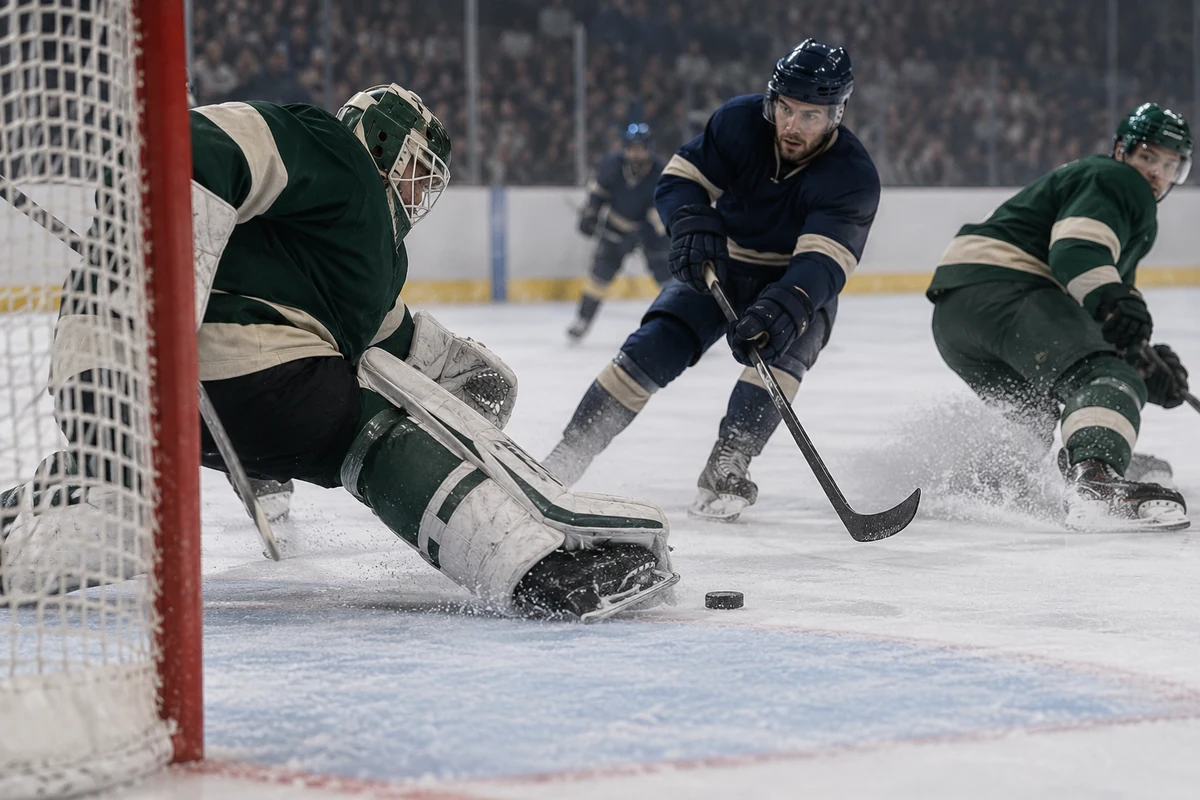
Why the first shot may not end the attack
A goalie can stop a puck without covering it. A rebound off a pad, stick, or body leaves the attacking team a chance to shoot again near the net. A rebound shot differs from a simple shot total: the useful question is whether a dangerous attack continues after the first attempt and how much time the defense has to recover its position.
There is no single public definition of a “rebound chance” used by every table. One source may tie the event to a shot after a save; another may use a short interval between attempts or a rebound location. If you count such sequences yourself, define the rule first. For example, count a follow-up shot only before a defender controls the puck or a whistle stops play. That is a practical protocol, not an official standard.
A sample calculation
Suppose a period contains 20 saves after which the puck stays live and an attacking rebound opportunity is available under the chosen rule. In eight cases, a second shot follows before the defense gains control. The follow-up rate for this sample is 8 / 20 = 40%. This is not a goal percentage or universal danger rating: one attempt may come from a poor angle and another from the slot.
If the follow-up shot is on target, it also enters the ordinary shot-on-goal count under the game’s scoring rules. One attack can therefore produce multiple attempts without creating multiple independent possessions. For the base term and official event count, see what counts as a hockey shot on goal.
Counts and quality are different
Rebounds can be dangerous because they happen near the net while defenders are moving, but location alone does not prove a high probability of scoring. The puck may slide toward the boards, bounce awkwardly, or give the goalie time to reset. Separate attempts after a save, a block, and a miss: they are different sequences.
For a goalie, a rebound sequence creates another action after the initial shot; the save count does not describe how difficult each follow-up was. Our guide to goalie statistics: saves and shots on goal explains that distinction. Do not transfer a “rebound chance” label to another source without checking its definition.
Market context
For a goals total, rebound attempts add attacking context, but frequency, danger, goalie, defensive lineup, and penalties still matter. For a player-shot market, check whether he was on the ice for these attacks and how the market defines a counted event. A chaotic bounce does not guarantee a goal, and the follow-up may come from a different player than the first shot.
Compare matching manpower states and periods, and record the counting rule. If the source does not explain how it labels rebounds, use the statistic only as a qualitative observation, not as a strict ranking across tables.
Read also
Faceoffs and Possession: A Win Does Not Describe the Whole Game