
Best-of-Three or Best-of-Five: How Tennis Format Changes the Match
Match format determines how many sets are needed and the possible range of play, but it does not predict the match script.
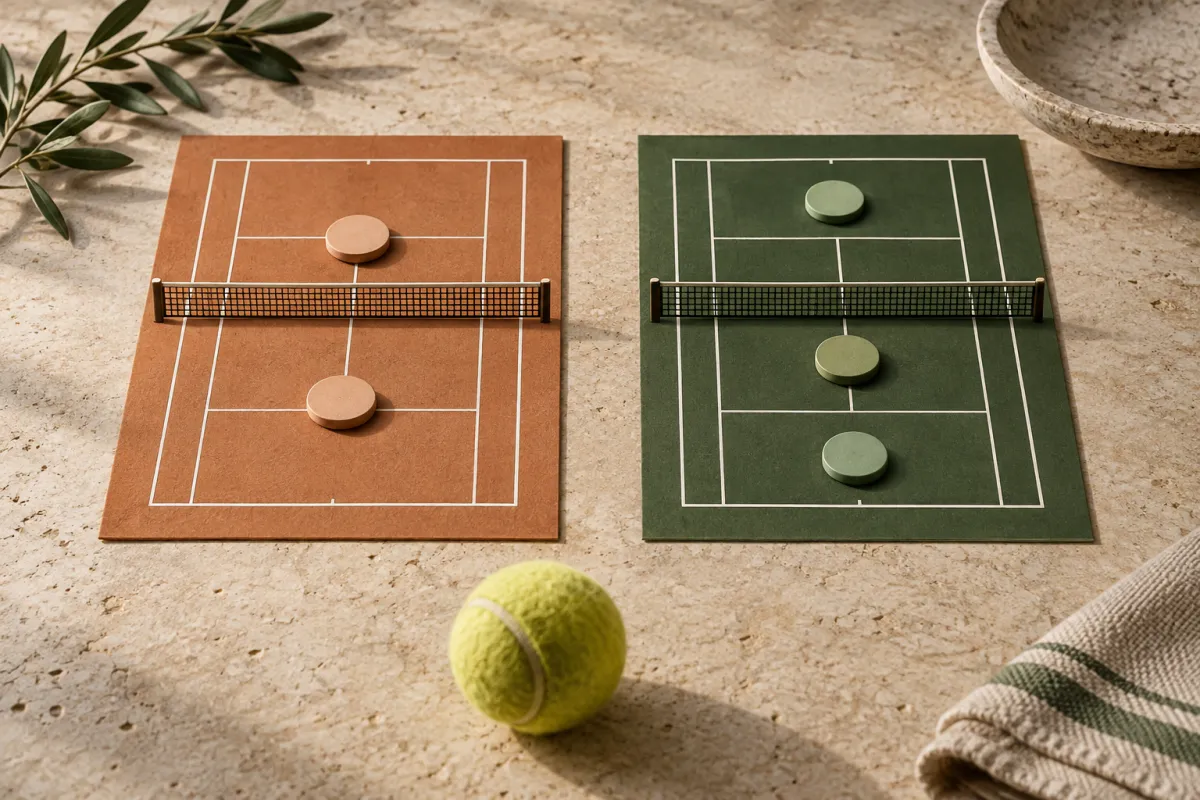
What the match format means
Best-of-three means a player must win two sets; best-of-five means they must win three. These are the maximum number of sets: the match can end earlier when one player reaches the required number of wins. The ITF glossary notes that most standard tennis matches use best-of-three, while some competitions use best-of-five.
Always verify the format for the specific match. It depends on the event, category, round, and regulations. Do not assume it based on habit or on the format the players usually face elsewhere.
How the format changes the score range
More possible sets create a wider range of total games and playing time. A best-of-three match may contain two or three sets; a best-of-five match may contain three, four, or five. That does not mean every best-of-five match is longer than every best-of-three: short sets and quick wins are possible too.
For a games total, add the actual set scores rather than multiplying an average set length by the maximum number of sets. For a sets total, the format is even more important: best-of-three cannot have more than three sets and best-of-five cannot have more than five. Market rules may also specify how unfinished matches and match tie-breaks are counted.
Fitness and scheduling are different factors
Fitness may matter more when more sets are possible, but format alone does not explain the result. Playing style, rally length, surface, serve, recovery time, and prior workload can all be relevant. One player may win a long match and then have enough time to rest; another may spend less time on court but face an awkward schedule.
Do not use the format as a substitute for recovery information. Check the actual order of play and the tournament’s rules. Format is a structural frame, not a claim about who will tire first.
A fair comparison
Compare two matches only after confirming that they used the same format. Then note the number of sets and games, tie-breaks, and opponent level. If one match was best-of-five and another best-of-three, their set counts are not directly comparable as a player trend.
For longer-term statistics, separate results by format. If observations are limited, do not fill the gap with an overall win percentage. State the limitation and keep the conclusion cautious.
What to check
- Confirm the sets needed to win and the maximum format.
- Check whether the format changes at this stage of the event.
- Find out whether a match tie-break is used.
- Compare statistics from the same format.
- Consider the schedule and recovery time separately.
- Do not treat a longer format as a promise of a longer match.
Format changes the possible score range, not the eventual result. For the broader structure of a tennis match, see the tennis match analysis guide.
Read next
Sportexa AI
Apply this to a real match
Choose a match in Sportexa AI and ask the assistant how the available sports data and current odds relate to the idea in this article.
Open the assistant