
Left-Handed Server vs Right-Handed Returner: Read the Matchup
Court side, serve direction, and spin interact with the returner’s handedness. Learn how to inspect the actual matchup without treating left-handedness as an automatic edge.
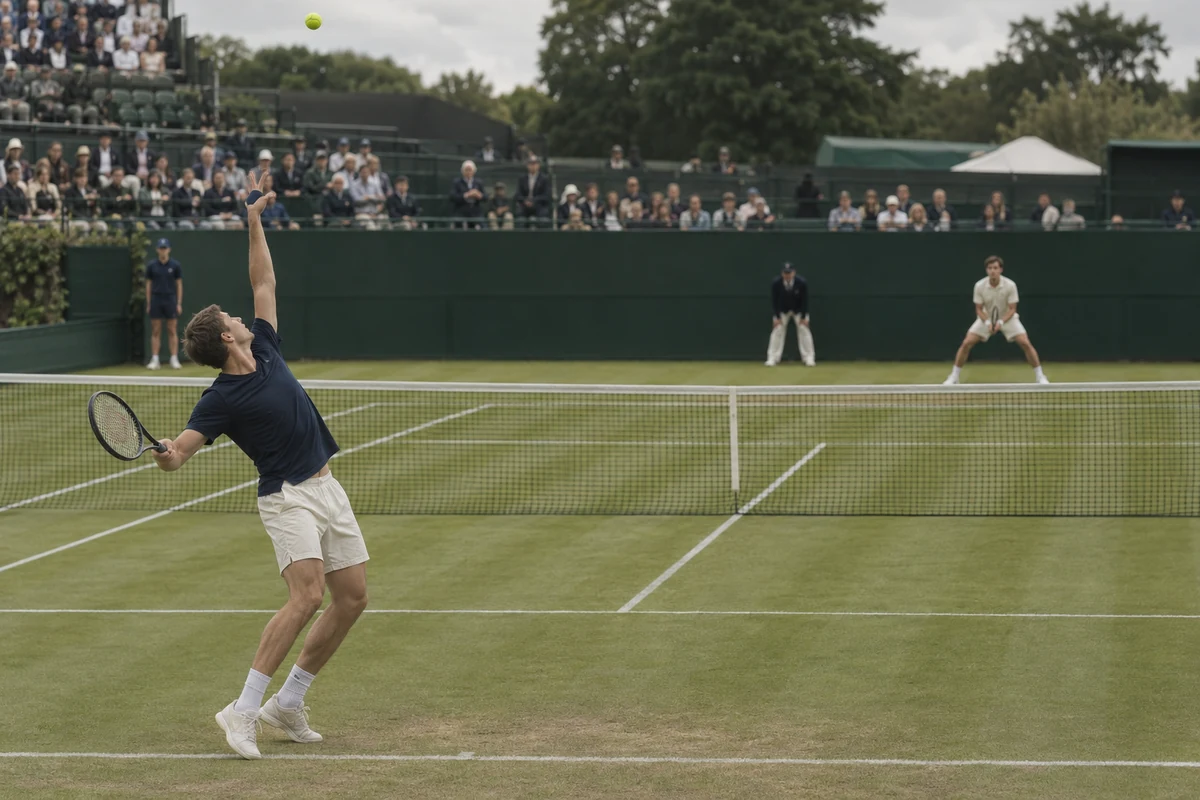
Handedness changes the geometry of serve and return
Start a lefty-versus-righty comparison with a specific situation, not the label “awkward opponent”: who is serving, who is returning, from which side, and toward which target? From the same court side, a serve hit with the opposite hand can create a different angle and spin. The outcome still depends on execution, the returner’s position, and their habits. Handedness alone guarantees neither an ace nor a won point.
Break the situation into sides and targets
Separate deuce and ad courts, first and second serves, and wide, body, and T targets. Check how the source defines “wide” and “centre”: is direction named from the server’s or the returner’s perspective? The same label in two reports may not mean the same ball angle for a left- and a right-handed server. Add the point outcome: ace, unreturned serve, return in play, error, or a point won after several shots.
The returner’s position matters too. A player may stand closer to the middle, move early, or adjust depth after seeing several serves. Compare target, stance, score, serve type, and return quality together. The existing serve and return guide helps separate service points won from outcomes on particular targets; court surface analysis covers another part of the context.
A hypothetical example without a handedness shortcut
Imagine a left-handed server facing a right-handed returner. Across five service games on the deuce court, the source records wide first serves that move away from the returner, but the receiver begins standing closer to the sideline and returns more of them into play. The next question is not “is the lefty better?” It is whether the actual landing zone, first-serve rate, and quality of the next shot changed. A match total of aces alone cannot attribute the result to handedness or court side.
A study using video scenarios and professional-match observations found that opponents may direct more balls toward a left-hander’s forehand, partly reflecting an automatic directional preference. That is an interesting observation about tactical habits, not a current estimate for a specific pair and not a rule for every serve. Sample, era, player level, and the difference between a rally shot and a serve limit how far the finding can be applied to one match.
Practical use
Check the source, sample size, and whether situations are comparable: server and returner, court side, first or second serve, surface, and opponent level. Do not mix match totals with a few memorable points. In a market assessment, use current form and the returner’s actual response rather than handedness alone. If the needed breakdown is unavailable, the honest conclusion is that there is not enough evidence for a separate left-handedness effect.
Read also
Sportexa AI
Apply this to a real match
Choose a match in Sportexa AI and ask the assistant how the available sports data and current odds relate to the idea in this article.
Open the assistant