
A Tennis Medical Timeout: What Can Be Known About the Match?
A medical assessment break does not reveal a diagnosis or severity. Separate public facts, event rules and uncertainty.
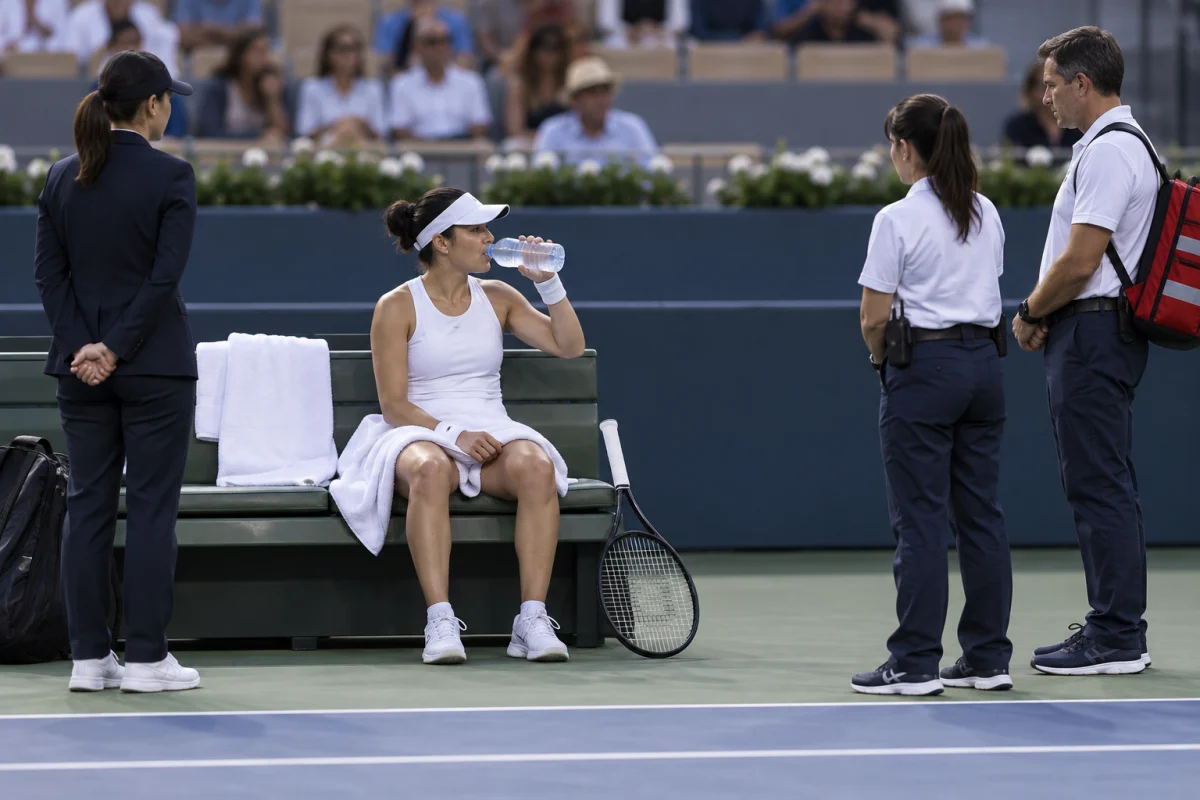
A pause is observable; a diagnosis is not
A broadcast may show play stopping while a player receives medical attention. That supports a description of the public event and its timing, but it does not establish a diagnosis, severity or ability to continue. Facial expression, movement, a conversation with staff or the duration of a break are not substitutes for an official statement. Do not repeat health speculation as fact.
The term and procedure for a medical timeout depend on the tour, event regulations and current rule edition. The guide to tennis scoring and handicaps offers basic score context, but medical procedures and discipline require the rules for the specific competition. Professional tours and Grand Slam events may have separate regulations; this article does not state a universal time limit.
What can be recorded
For a neutral account, keep:
- confirmed time when play stopped and resumed;
- current game and set score;
- official match status: continuing, completed or retired;
- confirmed statements from the organiser or umpire, if published;
- the source and date of each update.
If the video feed lags behind the official scoreboard, note which source records each moment. Do not estimate the break from a replayed or partial clip. A short event log helps distinguish a pause, a player’s return and an announcement of retirement.
Do not attribute the match result to the timeout before the contest ends and the status is updated. A player may return, continue with limitations or retire; the pause alone does not tell you which path will follow. Apply the same caution to tennis odds movement: a price does not confirm a medical cause.
Check the market and settlement
Before betting, find out what happens if a player retires after the match has started and which markets require a completed result. Rules may differ for match winner, games, sets and player statistics. Do not transfer one operator’s standard to another. A medical timeout does not necessarily mean the match has ended or been cancelled.
In live play, the event, video, statistics feed and price change may arrive at different times. Do not decide from one unconfirmed source or chase an odds move after the pause.
Read information responsibly
Discuss only what is publicly confirmed: play stopped, the score and the official result. Do not make a medical judgement or replace missing information with confidence. If the match status or market rule is unclear, it is reasonable to pass. Even a confirmed event cannot guarantee an outcome; keep any risk within a limit set in advance.
Read next
Sportexa AI
Apply this to a real match
Choose a match in Sportexa AI and ask the assistant how the available sports data and current odds relate to the idea in this article.
Open the assistant