
How the Score Changes Shots and Corners in Football
A team behind may attack more while a leader protects its advantage. Treat score as statistical context, not a betting signal.
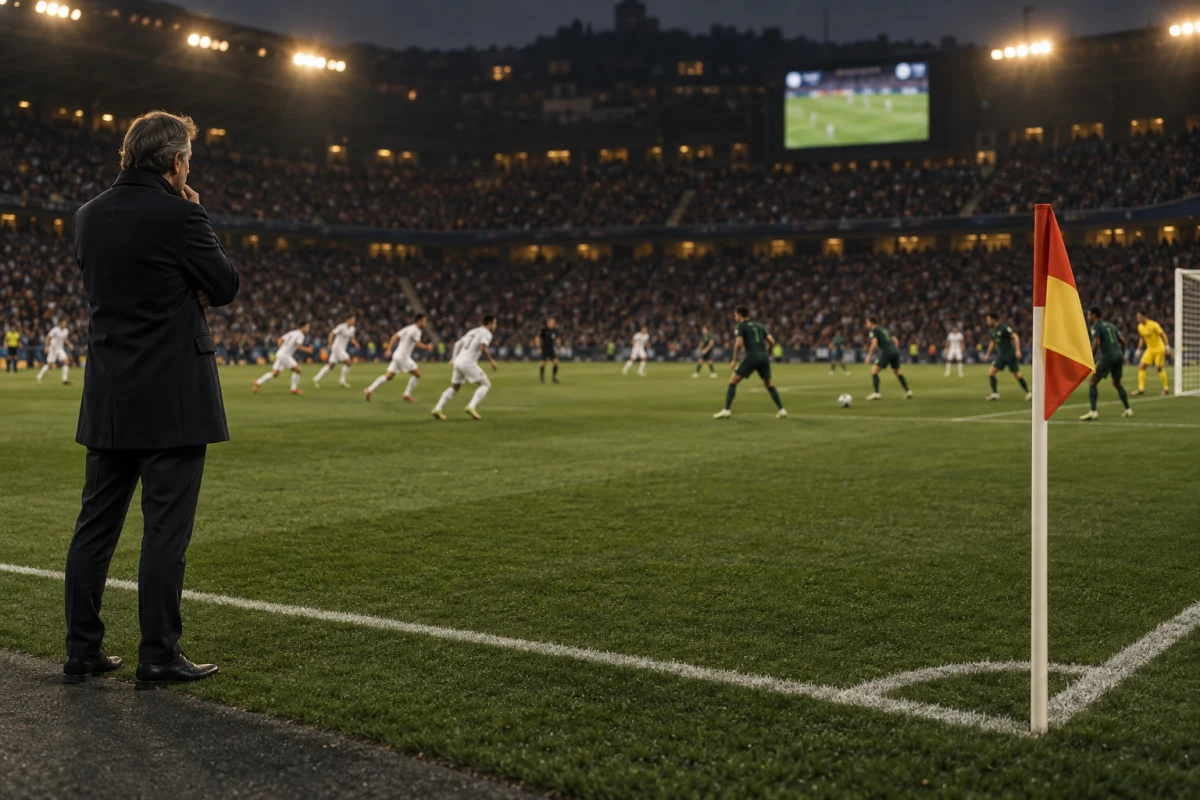
Statistics depend on the match state
The score is more than the final line. It can change both teams’ decisions: a side behind may move the ball forward more often, while a leader may defend deeper and look for transitions. Shot and corner counts therefore depend on the current state of play. This is not a rule for every team; style, minute, lineup and opponent can all change the pattern.
Research on match events treats score as one contextual factor associated with attacking actions. But an observed relationship does not prove every extra shot was caused by a deficit. The reverse can also happen: a team takes many attempts, fails to score and ends up behind. That distinction matters when reading xG and xGA and shots and corners from wide attacks.
Split the match into states
Compare time while level, ahead and behind separately. Record when the first goal occurred and the state at the beginning of each interval. If a team scores or concedes, do not combine the whole match into one row and interpret total corners without the game script.
Also record dismissals, substitutions, penalties and major stoppages. A red card and score change may happen close together, so you cannot assign every later shot to one factor. Compare teams in the same state and similar time windows. With a small number of matches, show a range rather than presenting one average as a stable norm.
For each interval, useful fields include:
- shots and corners for both teams;
- score and start/end minute;
- shots on target or xG, if the source method is known;
- home status and dismissals;
- match count in each group.
Corners also need context
A corner may follow pressure, a deflection, a blocked cross or a team’s choice to play the ball into the area. A side that needs a goal may use the flanks more, but the response depends on the coach. A deficit does not automatically mean more corners in the next match. Before assessing a market, check how the source records corners and what period the line covers.
Practical use
Game state helps describe historical data and makes comparisons more useful, but it does not guarantee the next phase will follow the same pattern. Live analysis must account for statistic-feed delays and score confirmation. If the price has already moved, shot count alone does not prove value. You need an estimate for the exact outcome and a comparable price; without a validated calculation, passing is reasonable.
Read next
Sportexa AI
Apply this to a real match
Choose a match in Sportexa AI and ask the assistant how the available sports data and current odds relate to the idea in this article.
Open the assistant